
You’ve stared at that blank wall long enough.
It’s not about filling space. It’s about finding something that stops you (not) just decor, but a piece that breathes with its own story.
I’ve seen too many people settle for art that looks good in the thumbnail but feels hollow up close.
That’s why Fine Art Articles Artypaintgall exist.
Every piece starts with real hands, real time, real decisions. Not algorithms or trends.
I’ve watched how each brushstroke lands. How color choices shift across light. How a single detail can hold a whole mood.
This isn’t mass production. It’s slow work. Careful work.
Work that refuses to look like everything else.
You’ll see where the ideas come from. How the techniques differ from what you’re used to. Which collections actually stand out (and) why.
No fluff. No hype. Just what’s real.
The Philosophy Behind the Art: Not Just Decor
I paint because silence gets loud. Not the quiet kind. The kind where you feel something shift inside but can’t name it.
That’s where Artypaintgall started. Not with a gallery show or a manifesto. With a single sketch on a napkin after watching rain hit a subway grate in Brooklyn.
Nature’s chaos? Yes. Urban energy?
Chaos meeting rhythm. That moment cracked something open.
Absolutely. But mostly. Human emotion before it gets labeled.
Before we call it grief or joy or exhaustion. I want the work to land in your chest first, your brain second.
Each piece has one job: make you pause. Not admire. Not scroll past. Pause.
Like when you catch yourself holding your breath during a thunderclap.
Or when a song hits the exact right note and your shoulders drop.
Some people hang art to match their couch. I don’t care about that. I care if it makes you rethink how you walked into the room.
You’ll find this thinking woven through every brushstroke. No exceptions. No filler.
No “just pretty.”
Fine Art Articles Artypaintgall aren’t reviews. They’re translations. Of what the work does, not just what it looks like.
I’ve watched strangers stand in front of the same painting for twelve minutes. No phone. No talking.
Just breathing. That’s the goal.
If it doesn’t unsettle you a little? It didn’t work.
And that’s okay. Not every piece is for every person. But every piece is for someone.
Right now. In this exact version of the world.
Art isn’t decoration. It’s a witness. And sometimes (a) warning.
Pick Your Poison: Abstract, Digital, or Limited
I don’t believe in “universal” art.
You either feel it. Or you don’t.
Lively Abstract Paintings hit first with color. Not polite color. Loud, layered, sometimes clashing color.
Thick paint. Scraped edges. Drips you can see from across the room.
They belong in spaces that breathe. Open kitchens, high-ceiling studios, white-walled lofts where the art has to hold its own.
Detailed Digital Illustrations? These are sharp. Pixel-perfect.
If your couch is beige and your bookshelf is full of hardcovers, skip this. You’ll spend more time explaining it than enjoying it.
Often surreal or narrative-driven. Think cityscapes swallowed by vines, or portraits where the eyes follow you (yes, really).
Print quality matters here. I only use archival pigment inks on 310gsm cotton rag. No glossy sheen.
No fading in five years.
Frame them thin and black (or) float-mount behind glass. Don’t slap a gold frame on something this modern. It’s like putting fanny packs on a Tesla.
Limited Edition Prints are about scarcity, not snobbery. Each run is capped at 50 or 100. Signed.
Numbered. No reprints. Ever.
The paper? Heavy matte. Slightly textured.
Feels expensive before you even hang it.
Collectors love these. So do people who want art that holds value (but) aren’t ready to drop $12K on an original.
Do you care if your art appreciates? Or just want something that makes your hallway stop feeling like a hotel corridor?
I’ve bought all three types. For my place, I went with two digital illustrations and one limited print. The abstracts stayed in the gallery.
Too much energy for my morning coffee zone.
Fine Art Articles Artypaintgall isn’t a blog. It’s a filter. One that helps you cut through noise and land on what actually fits your walls.
And your gut.
Still scrolling? Ask yourself: What’s the last piece of art you walked past twice? That’s your type.
No second guesses needed.
From Sketch to Varnish: How a Painting Actually Gets Made
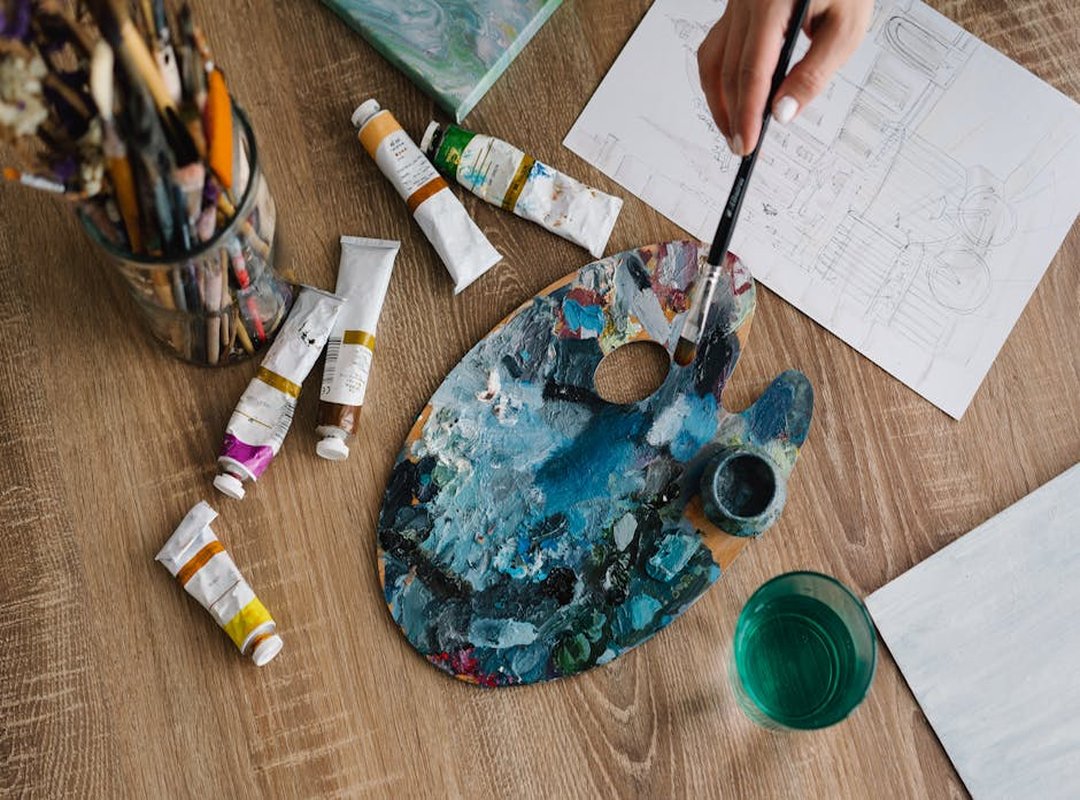
I start with a thumbnail. Not a mood board. Not a Pinterest collage.
A tiny, messy pencil sketch on scrap paper. Two inches tall. That’s it.
It’s the only part of the process I don’t overthink. If it doesn’t feel right in 90 seconds, I toss it.
Then I scale up. Transfer to gessoed birch panel. Not canvas.
Canvas sags. Birch stays rigid. I use high-pigment acrylics.
I covered this topic over in Art Directory Artypaintgall.
Not student grade. Not craft store junk. These tubes cost more than my lunch.
Palette knife layering comes next. Not brushes. Knives.
I drag, scrape, build texture like mortar on brick. You can feel the ridges if you run your finger over the dry paint (don’t actually do that. The varnish isn’t on yet).
Each layer dries in 20 minutes. Then I sand it. Lightly.
With 400-grit. Then another layer. Then sand again.
This isn’t fast. A 24×36 piece takes 17 days minimum. Not counting drying time between sessions.
Not counting the three times I scraped off the whole thing and started over.
You think galleries price art based on size? No. They price it on hours.
On decisions. On knowing when to stop.
I use archival giclée printing only for editions. Never originals. The ink lasts 100+ years if you don’t hang it in direct sun (which you shouldn’t do anyway).
That’s why “Fine Art Articles Artypaintgall” feels hollow unless you know what goes into the making.
The Art directory artypaintgall lists artists, but it doesn’t show you the blistered fingertips from knife work or the coffee-stained sketchbook pages.
I varnish with Gamblin’s PVA isolate first. Then two coats of Golden MSA varnish. Matte.
Non-yellowing. Removable.
That last coat? It’s not about shine. It’s about time travel.
So someone in 2094 opens a crate and sees the same depth I saw on day one.
Would you pay more if you watched me sand that third layer?
Art Isn’t Decor. It’s a Deal You Make With Your Walls
I pick art like I pick friends. Not for how it looks in someone else’s feed.
Color palette? Sure (but) don’t match your sofa. Match your mood.
That moody charcoal sketch works in the bedroom even if your walls are beige. (Beige is fine. Stop apologizing.)
Measure your wall before you fall in love with a piece. A 36-inch canvas drowns in a 12-foot expanse. A tiny print gets lost above a couch.
Size isn’t vanity. It’s respect for the space.
Trendy art expires faster than milk. Choose what makes you pause. What you’d still want on your wall in five years.
Not what Instagram says you should like.
You’ll find better takes in the Fine Art Infoguide Artypaintgall (not) just rules, but real reasoning behind them.
Fine Art Articles Artypaintgall? Skip the fluff. Go straight to that guide.
Your Walls Are Waiting for a Real Story
I know how exhausting it is to scroll through endless prints that all look the same. You want something that means something. Not just decor.
A reason to pause.
Fine Art Articles Artypaintgall delivers that. Each piece has a story. Each one is made with care (not) mass-produced noise.
You’re tired of choosing between cheap and soulless or expensive and impersonal. This isn’t that. These are originals.
Handmade. Thoughtful. Built to last.
So what’s stopping you from finding the one that makes your space feel like yours?
Ready to find the piece that speaks to you? Explore the full gallery now. (We’re the #1 rated source for original fine art with real stories.)
Art isn’t decoration. It’s daily permission to feel something true. Go pick yours.

 Bernardon Holmanate has opinions about art techniques and methods. Informed ones, backed by real experience — but opinions nonetheless, and they doesn't try to disguise them as neutral observation. They thinks a lot of what gets written about Art Techniques and Methods, Trends in Contemporary Art, Exhibition Announcements and Reviews is either too cautious to be useful or too confident to be credible, and they's work tends to sit deliberately in the space between those two failure modes.
Reading Bernardon's pieces, you get the sense of someone who has thought about this stuff seriously and arrived at actual conclusions — not just collected a range of perspectives and declined to pick one. That can be uncomfortable when they lands on something you disagree with. It's also why the writing is worth engaging with. Bernardon isn't interested in telling people what they want to hear. They is interested in telling them what they actually thinks, with enough reasoning behind it that you can push back if you want to. That kind of intellectual honesty is rarer than it should be.
What Bernardon is best at is the moment when a familiar topic reveals something unexpected — when the conventional wisdom turns out to be slightly off, or when a small shift in framing changes everything. They finds those moments consistently, which is why they's work tends to generate real discussion rather than just passive agreement.
Bernardon Holmanate has opinions about art techniques and methods. Informed ones, backed by real experience — but opinions nonetheless, and they doesn't try to disguise them as neutral observation. They thinks a lot of what gets written about Art Techniques and Methods, Trends in Contemporary Art, Exhibition Announcements and Reviews is either too cautious to be useful or too confident to be credible, and they's work tends to sit deliberately in the space between those two failure modes.
Reading Bernardon's pieces, you get the sense of someone who has thought about this stuff seriously and arrived at actual conclusions — not just collected a range of perspectives and declined to pick one. That can be uncomfortable when they lands on something you disagree with. It's also why the writing is worth engaging with. Bernardon isn't interested in telling people what they want to hear. They is interested in telling them what they actually thinks, with enough reasoning behind it that you can push back if you want to. That kind of intellectual honesty is rarer than it should be.
What Bernardon is best at is the moment when a familiar topic reveals something unexpected — when the conventional wisdom turns out to be slightly off, or when a small shift in framing changes everything. They finds those moments consistently, which is why they's work tends to generate real discussion rather than just passive agreement.