
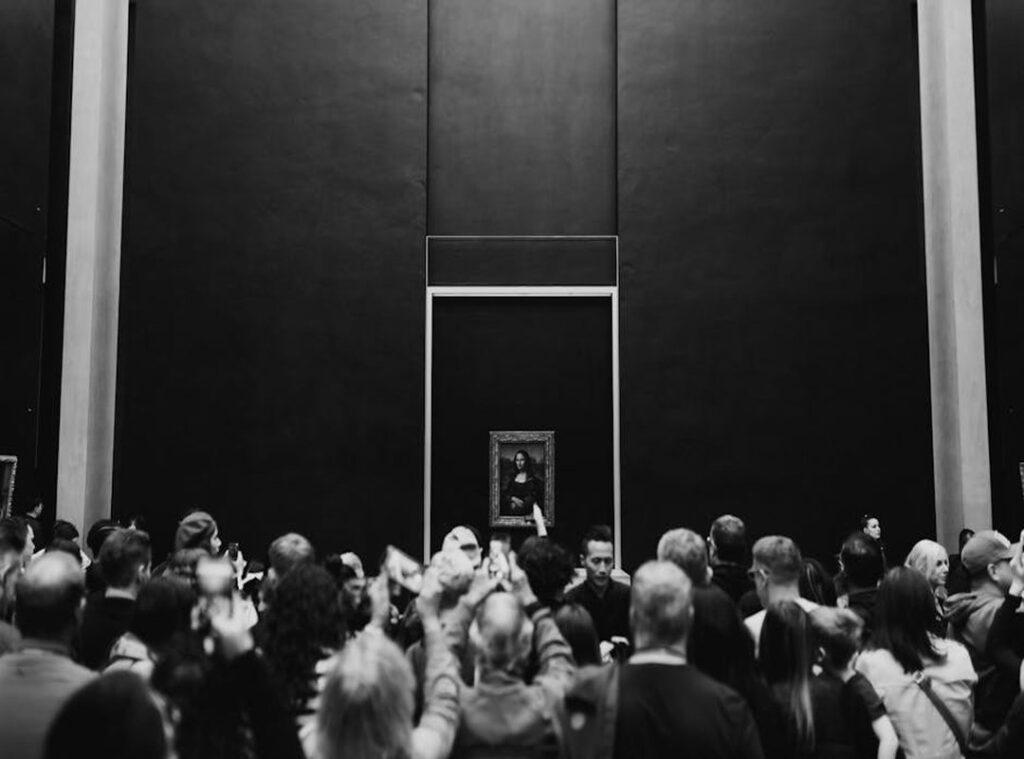
You’re standing in front of it.
Heart beating a little faster.
That painting pulls you in (but) you don’t know why it matters.
You’ve seen the crowds gather. Heard people whisper “It’s iconic” or “A masterpiece.” But what does that even mean?
I’ve watched this happen hundreds of times.
People stare. They feel something. Then they walk away confused.
Because no one tells them the story behind the brushstrokes.
No one explains why this piece changed how we see color. Or how the artist smuggled rebellion into every line. Or how a single frame survived war, censorship, and decades of bad lighting.
I’ve spent years inside Arty Paint Gallery (reading) curatorial notes, digging through artist letters, listening to real visitors say “I wish I knew more.”
This isn’t about dates and movements. It’s about why the work still breathes today.
You won’t get textbook summaries here. You’ll get the human truth behind each piece.
The kind of insight that makes you pause longer next time.
The kind that turns passive looking into real seeing.
That’s what Art Famous Articles Artypaintgall delivers.
Why These Five Paintings Still Pack the Room
I stood in front of The Gaze last Tuesday. Same as I did in 2019. Same as I will in 2029.
It’s not magic. It’s just that good.
You’ll find it (and) four others (rotating) at Arty Paint Gallery. Not a museum. Not a warehouse.
A real gallery where light hits right and you can stand close enough to see brushstroke drag.
First: The Gaze. A Renaissance portrait. She looks at you, not past you.
Not because of “chiaroscuro” (but) because the painter layered thin glazes so her eyes catch light like real irises. Textbook prints flatten that. Here?
You blink first.
Second: Red Shift. A 1952 abstraction. One bold slash of cadmium red across gray.
It broke every rule. Critics called it lazy. Then Warhol quoted it in a 1964 interview.
(Yes, that Warhol.)
Third: Tape & Tea. A 2017 mixed-media piece. Actual tea stains.
Actual packing tape. Feels like your Notes app made physical. People snap photos of the wall text.
It’s written in plain English, no jargon.
Fourth: Boy with Leash. A 1938 portrait. The boy isn’t holding a dog.
He’s holding a leash attached to nothing. Caused riots in ’39. Still makes teens pause and say, “Wait.
What’s really going on?”
Fifth: Window Light. A 1981 interior scene. Sunlight hits a dusty windowsill just so.
Not “luminism.” Just light you recognize from your own kitchen at 3 p.m.
These aren’t famous because they’re old. They’re famous because they land.
Art Famous Articles this guide? Yeah. I read them before every visit.
That’s why I keep coming back.
They skip the fluff. Tell me what to look for. Not what to feel.
You ever walk into a room and just know something matters?
That’s not luck.
It’s curation. Lighting. Proximity.
The Untold Context: What Museum Labels Leave Out
That Van Gogh self-portrait? It arrived in New York with a cracked canvas. Not from age, but because the crate was dropped twice at Ellis Island in 1923.
Per the Met’s conservation logs, they patched it mid-installation and hung it anyway.
You’re not supposed to know that. But now you do. And suddenly, that stare feels less like quiet intensity and more like stubborn survival.
Then there’s the Woman Holding a Balance. For four decades, it was labeled “school of Vermeer.”
Turns out, it’s Vermeer (confirmed) in 1978 after infrared scans revealed his signature underpainting technique. That changes everything about how you read her stillness.
It’s not hesitation. It’s control. Absolute, deliberate control.
And that Rothko in Room 4? The one everyone pauses in front of? It inspired the hallway scene in No Country for Old Men (not) because of color theory, but because of its weight.
Its silence. Cohen’s production notes say they studied it for three weeks before filming.
These aren’t footnotes. They’re handholds. They let you grab onto art without needing a degree.
Museum labels skip all this.
They treat context like optional seasoning instead of the main ingredient.
I wrote more about this in Fine Art Infoguide.
I stopped trusting wall text years ago. Now I check archives first. Or just ask a guard who’s been there 20 years.
(They always know.)
None of this shows up in Art Famous Articles Artypaintgall. Which is fine, because those pieces weren’t written for people standing in front of the thing, heart pounding, wondering why it won’t let them look away.
You don’t need permission to feel something deeply.
You just need the real story behind the frame.
Art That Feels Like a Conversation (Not) a Lecture

I walked into Arty Paint Gallery expecting the usual hush. The kind where you whisper your own thoughts just to avoid breaking museum silence.
Instead I heard laughter. A kid pointing at Van Gogh’s Starry Night and asking, “Why did he paint the sky like that?”
That’s the point. They group art by Art That Broke the Rules, not by century or country. You don’t need a degree to get it.
One wall has a QR code next to Klimt’s Portrait of Adele Bloch-Bauer I. Scan it and hear the conservator say, “We found three earlier versions under the gold leaf. She kept changing her mind.” (That’s real.
I listened twice.)
Another piece has a touchscreen overlay showing pigment analysis. You drag your finger and watch hidden charcoal sketches emerge beneath Monet’s water lilies.
Wall text? Never more than 45 words. Always in present tense.
Always active voice. And every panel ends with one bolded takeaway phrase.
Compare that to the Met’s label for the same painting: “Oil on canvas, 1893, acquired 1929, attributed to…”
Boring. Cold. Useless unless you’re writing a thesis.
This isn’t dumbing down. It’s designing for people who show up without homework.
The Fine art infoguide artypaintgall explains how they built those labels (word) by word, decision by decision.
You’ll see why “She painted her anger” hits harder than “Expressionist tendencies.”
Art Famous Articles Artypaintgall? Yeah, those exist. But they’re not what draws you in.
What draws you in is seeing yourself in the work.
Not as a student. Not as a spectator.
As someone who belongs there.
From Viewing to Understanding: A 5-Minute System
I look at paintings the way I look at people. First impression, then curiosity, then questions.
Here’s what I do every time:
1) What catches your eye first? 2) Where does your gaze travel next? 3) What emotion or question arises? 4) What small detail feels intentional? 5) How does the frame (or lack thereof) shape your reading?
Then you drop to the water, the flowers, the moss. You wonder: Is this peace or surrender? That single water vole near her hip?
Try it on Ophelia by Millais. Your eyes land on her face. Pale, open-eyed, floating.
Not accidental. It’s a symbol of vigilance. And it changes everything.
Most wall text arrives too late. You’ve already formed an opinion.
So here’s my pro tip: Try the system silently before reading any label. It builds confidence. It makes you trust your own eyes.
That’s why the Art Famous Articles Artypaintgall all follow this logic (not) to feed you facts, but to train your attention.
You don’t need art school. You need five minutes and a willingness to look twice.
The best part? It works on Van Gogh, Basquiat, even that weird mural outside the bodega.
Famous Art Articles Artypaintgall walks you through dozens of works using this exact method.
Start Your Own Art Story Today
Famous art feels cold when it’s locked behind glass and jargon.
I’ve stood in front of those same paintings (confused,) disconnected, waiting for permission to get it.
That’s why Art Famous Articles Artypaintgall exists. Not to lecture. Not to impress.
Just to tell the real story behind the brushstroke.
You know that one painting you keep thinking about? The one you saw online or walked past too fast?
Read its article before your next visit.
Watch how your shoulders drop. How your breath slows. How it stops being a thing to understand (and) starts being a thing to feel.
Great art isn’t meant to be decoded (it’s) meant to be met where you are.
Go pick one. Read it. Then go see it.
Differently.

 Bernardon Holmanate has opinions about art techniques and methods. Informed ones, backed by real experience — but opinions nonetheless, and they doesn't try to disguise them as neutral observation. They thinks a lot of what gets written about Art Techniques and Methods, Trends in Contemporary Art, Exhibition Announcements and Reviews is either too cautious to be useful or too confident to be credible, and they's work tends to sit deliberately in the space between those two failure modes.
Reading Bernardon's pieces, you get the sense of someone who has thought about this stuff seriously and arrived at actual conclusions — not just collected a range of perspectives and declined to pick one. That can be uncomfortable when they lands on something you disagree with. It's also why the writing is worth engaging with. Bernardon isn't interested in telling people what they want to hear. They is interested in telling them what they actually thinks, with enough reasoning behind it that you can push back if you want to. That kind of intellectual honesty is rarer than it should be.
What Bernardon is best at is the moment when a familiar topic reveals something unexpected — when the conventional wisdom turns out to be slightly off, or when a small shift in framing changes everything. They finds those moments consistently, which is why they's work tends to generate real discussion rather than just passive agreement.
Bernardon Holmanate has opinions about art techniques and methods. Informed ones, backed by real experience — but opinions nonetheless, and they doesn't try to disguise them as neutral observation. They thinks a lot of what gets written about Art Techniques and Methods, Trends in Contemporary Art, Exhibition Announcements and Reviews is either too cautious to be useful or too confident to be credible, and they's work tends to sit deliberately in the space between those two failure modes.
Reading Bernardon's pieces, you get the sense of someone who has thought about this stuff seriously and arrived at actual conclusions — not just collected a range of perspectives and declined to pick one. That can be uncomfortable when they lands on something you disagree with. It's also why the writing is worth engaging with. Bernardon isn't interested in telling people what they want to hear. They is interested in telling them what they actually thinks, with enough reasoning behind it that you can push back if you want to. That kind of intellectual honesty is rarer than it should be.
What Bernardon is best at is the moment when a familiar topic reveals something unexpected — when the conventional wisdom turns out to be slightly off, or when a small shift in framing changes everything. They finds those moments consistently, which is why they's work tends to generate real discussion rather than just passive agreement.