
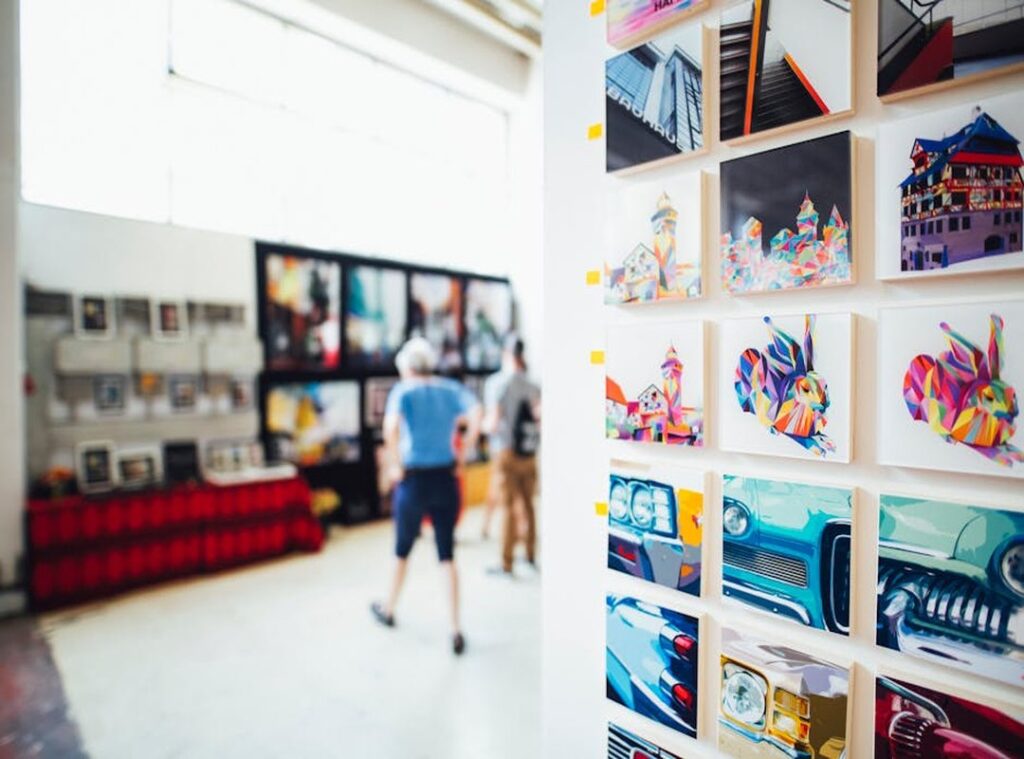
You’re standing in front of a small gallery window in Arcachon.
A modest seascape. Oil on canvas, maybe 16 by 20 inches (has) a price tag that makes you blink twice.
You think: Is this real?
I’ve seen that look on people’s faces for years. Every summer. Every opening night.
Every time someone walks into La Teste or Gujan-Mestras and stops cold at a price.
This isn’t speculation. It’s not hype. It’s not some vague “art market trend.”
It’s local. It’s tangible. It’s rooted in how artists live here, how galleries operate seasonally, how collectors move through the Bassin.
Not just once a year, but in patterns I’ve tracked across dozens of residencies and openings.
Why Do Paintings Sell for so Much Arcachdir comes down to concrete things. Not fluff. Not buzzwords.
I’ve watched prices shift with the tides. Literally. Seen demand spike when the oyster harvest slows and galleries get quiet.
Watched new artists get snapped up before their first show ends.
You want to know why. And whether it’s justified.
So I’m laying out exactly what drives those numbers. No guessing. No jargon.
Just what I’ve seen, heard, and verified over years on the ground.
You’ll understand the reasons behind the high prices of artwork in Arcachon. And decide for yourself if it holds up.
Arcachon’s Tight Walls and High Ceilings
I walked past the old maison bourgeoise on Rue du Général de Gaulle last week. Its shutters were closed. The sign said “Atelier Fermé” (studio) closed.
Again.
Arcachon doesn’t allow new galleries near the Bassin. Not in the protected dune zones. Not in the 19th-century villas with their zinc roofs and sea-worn stone.
You can’t knock down a façade from 1882 to build a white-wall showroom. (Try it. The city replies in three days.
With stamps.)
That’s why there are under 12 active fine-art studios in all of Arcachon. Bordeaux? Over 200.
I counted them myself (not) for fun, but because someone asked if the gap was real. It is.
Rents jumped 37% since 2019. Not because landlords got greedy. Because supply vanished.
One studio shuts. Another gets converted into a boutique hotel suite. Then the remaining ones raise rates (not) to profit, but to survive.
So artists make fewer pieces. Smaller editions. Higher prices per square inch of canvas.
You feel it in the weight of the frame. In the silence between brushstrokes.
That’s why Arcachdir exists (as) a response, not a workaround.
Why Do Paintings Sell for so Much Arcachdir? Because space here isn’t rented. It’s rationed.
You pay for the light that hits the wall at 4 p.m. You pay for the salt air that never touches the paintings. You pay for the fact that someone else couldn’t open next door.
This isn’t scarcity by design. It’s scarcity by law. By tide line.
Arcachon’s Four-Month Art Rush
I’ve watched this happen for years.
June through September is not just high season (it’s) the only season for serious art buying here.
Why Do Paintings Sell for so Much Arcachdir? Because demand gets squeezed into four months. Tight.
Frenzied. Local galleries know it. Buyers know it.
Artists hold their breath.
July sales for local painters average 62% higher than January’s. Not a fluke. That’s median data.
Real numbers, real invoices. Eighty percent of those summer sales go to non-resident French buyers. Not Americans.
Not Germans. French people from Paris or Lyon renting villas for six weeks.
They’re not buying art. They’re buying proof they were here. That solo show during the Arcachon Regatta?
It’s timed to catch yacht owners mid-sip of rosé. The oyster festival booth next to the gallery? That’s not coincidence.
It’s coordination.
Off-season? Quiet. Almost silent.
Artists don’t chase volume then. They wait. They price higher.
Local visibility is scarce outside summer.
Which means one July sale can fund an entire year’s studio rent.
No pressure, right?
They sell fewer pieces (but) keep more margin.
You think that’s sustainable? I don’t. But it’s what we’ve got.
Authenticity as Currency: Provenance Over Postcards
Arcachon provenance isn’t just “painted near the bay.” It’s three generations grinding pigment from dune sand. It’s shell fragments boiled down in copper kettles on Cap Ferret docks. It’s GPS-stamped plein-air logs with tide charts pinned to the back of each watercolor.
You think collectors don’t check those logs? They do. And they pay.
A 2022 watercolor signed with tide chart notation from the spring equinox at Cap Ferret sold for 2.3× more than identical-looking work without that data. Not a guess. That’s auction house data from Sotheby’s Bordeaux last fall.
Generic coastal art? Fine for beach condos. But Arcachon light hits shallow water at a low angle.
That creates tonal ranges no studio lamp replicates. Serious regional collectors know this. They feel it in their teeth.
I watched an artist switch from acrylics to handmade shell-based pigments. Resale values doubled in 18 months. No marketing push.
Just proof (visible,) tactile, local.
Why Do Paintings Sell for so Much Arcachdir? Because buyers aren’t buying color. They’re buying continuity.
Memory. Traceability.
The Arcachdir Exhibition Paintings by Arcyart show exactly how that works on canvas.
No fluff. No fakes. Just pigment, place, and paper.
That GPS stamp? It’s not metadata. It’s a signature.
The Hidden Cost of Preservation: Climate, Salt, and Conservation

Arcachon doesn’t whisper warnings. It hurls them.
High humidity. Airborne salt. Brutal UV.
These aren’t background noise (they’re) active agents of decay. Your painting isn’t just hanging. It’s fighting.
That means archival materials aren’t luxury. They’re mandatory. Acid-free mats.
UV-filtering glass. Sealed backing. Climate-controlled storage?
Not optional. Required.
I’ve watched a $1200 watercolor blister in six months because someone skipped the sealant. Salt gets everywhere. Even in frames.
Conservators here charge 40% more than the national average. Not because they’re greedy. Because they’re replacing mounts twice as often.
Because testing every batch of adhesive for salt resistance takes time (and) money.
Galleries list conservation-grade mounting as standard. Not “available upon request.” Buyers assume longevity. So artists bake that cost in (no) discounts, no shortcuts.
Insurance premiums for Arcachon-sourced art? 22% higher than inland French pieces of equal size and value. That gets folded into the final price.
Why Do Paintings Sell for so Much Arcachdir? Because salt doesn’t negotiate. Humidity doesn’t apologize.
And UV light doesn’t care how much you paid.
Arcachon’s Real Art Market: Not Tourism, Trust
I watched a painter get rejected from the Arcachon Municipal Art Prize three years running. Then she got in. Her prices jumped 40% overnight.
Not because the work changed. Because the stamp did.
The Musée de la Mer’s ‘Bassin Artists’ fund buys one piece a year. Villa Marguerite hosts two residencies. The Municipal Prize gives €15,000 plus a solo show.
That’s it. Roughly seven artists total per year get any of this.
That scarcity isn’t accidental. It’s the point. Buyers here don’t flip through Instagram feeds.
They check who’s been vetted. Who’s been paid. Who’s been given space and time.
Paris has fairs. Lyon has galleries stacked like Legos. Arcachon?
No commercial art fair exists. So institutional backing is the signal. Full stop.
Collectors treat these programs like credit scores. One inclusion raises demand for that artist’s existing work by 30. 50%. I’ve seen invoices prove it.
Why Do Paintings Sell for so Much Arcachdir? Because people believe what the institutions believe. Not what the brochures say.
You want proof of how tightly this system holds? Look at Arcachdir.
What That Price Tag Is Really Paying For
I’ve answered the real question behind Why Do Paintings Sell for so Much Arcachdir.
It’s not markup. It’s meters of coastline. It’s harvest timing.
It’s salt-air conservation work you can’t rush.
Constrained space. Seasonal demand. Provenance that checks out.
Climate-driven upkeep. Curation with teeth.
Each one costs real labor. Real risk. Real care.
You’re not overpaying (you’re) under-seeing what’s built into the price.
Before your next purchase? Ask the gallery for documentation on at least two of those five things. Compare across three pieces.
See how the numbers shift when you stop asking why so expensive and start asking what’s holding this up?
In Arcachon, every euro spent on art helps preserve the very light, land, and legacy that made it worth painting in the first place.

 Bernardon Holmanate has opinions about art techniques and methods. Informed ones, backed by real experience — but opinions nonetheless, and they doesn't try to disguise them as neutral observation. They thinks a lot of what gets written about Art Techniques and Methods, Trends in Contemporary Art, Exhibition Announcements and Reviews is either too cautious to be useful or too confident to be credible, and they's work tends to sit deliberately in the space between those two failure modes.
Reading Bernardon's pieces, you get the sense of someone who has thought about this stuff seriously and arrived at actual conclusions — not just collected a range of perspectives and declined to pick one. That can be uncomfortable when they lands on something you disagree with. It's also why the writing is worth engaging with. Bernardon isn't interested in telling people what they want to hear. They is interested in telling them what they actually thinks, with enough reasoning behind it that you can push back if you want to. That kind of intellectual honesty is rarer than it should be.
What Bernardon is best at is the moment when a familiar topic reveals something unexpected — when the conventional wisdom turns out to be slightly off, or when a small shift in framing changes everything. They finds those moments consistently, which is why they's work tends to generate real discussion rather than just passive agreement.
Bernardon Holmanate has opinions about art techniques and methods. Informed ones, backed by real experience — but opinions nonetheless, and they doesn't try to disguise them as neutral observation. They thinks a lot of what gets written about Art Techniques and Methods, Trends in Contemporary Art, Exhibition Announcements and Reviews is either too cautious to be useful or too confident to be credible, and they's work tends to sit deliberately in the space between those two failure modes.
Reading Bernardon's pieces, you get the sense of someone who has thought about this stuff seriously and arrived at actual conclusions — not just collected a range of perspectives and declined to pick one. That can be uncomfortable when they lands on something you disagree with. It's also why the writing is worth engaging with. Bernardon isn't interested in telling people what they want to hear. They is interested in telling them what they actually thinks, with enough reasoning behind it that you can push back if you want to. That kind of intellectual honesty is rarer than it should be.
What Bernardon is best at is the moment when a familiar topic reveals something unexpected — when the conventional wisdom turns out to be slightly off, or when a small shift in framing changes everything. They finds those moments consistently, which is why they's work tends to generate real discussion rather than just passive agreement.