Why 2026 Is a Milestone Year for Art Lovers
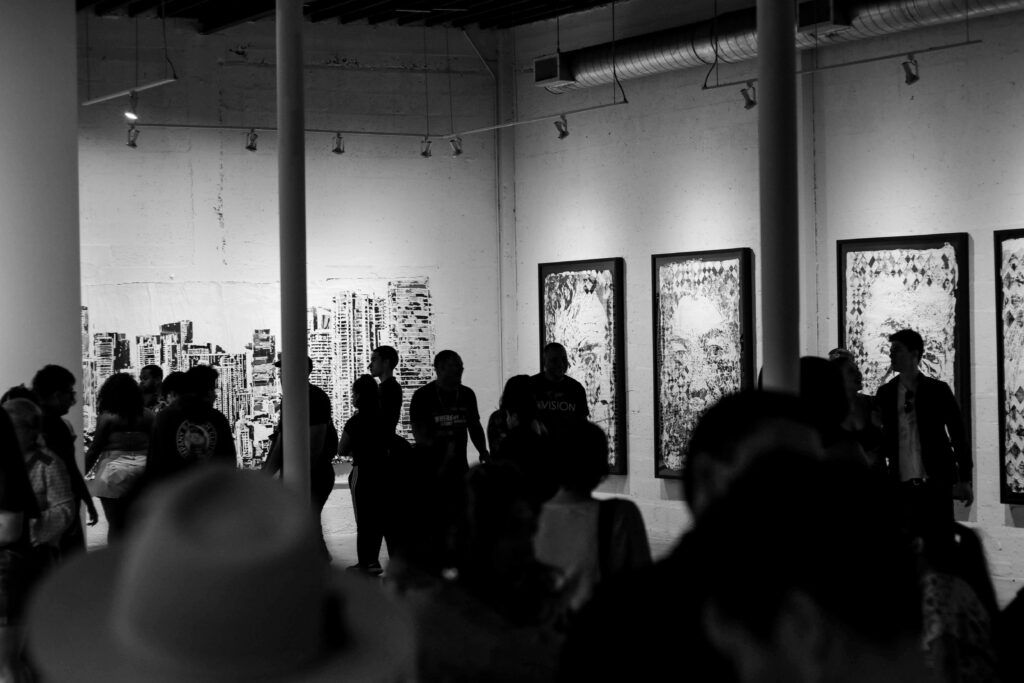
After years of pandemic disruption, in person art is back and not just back, but reborn. Across continents, people are stepping out again, seeking shared experiences that can’t be streamed or swiped. Museums, galleries, and cultural centers have picked up on this shift, responding with ambitious programming, major renovations, and bold new leadership. This isn’t about nostalgia for pre 2020 norms. It’s about redefining what art looks like when it’s experienced live, together, and with purpose.
Big players like The Broad and Mori Art Museum are doubling down on physical space, while new voices curators and collectives alike are pushing conversations forward. There’s a clear appetite for risk, for experimentation, and for expanding who gets to be included in the artistic narrative.
At the same time, digital innovation isn’t being cast aside. Instead, it’s leveling up the gallery experience. Think AR layers over sculptures, interactive archives, blockchain backed installations. The boundary between screen and canvas is getting softer but without erasing the magic of standing in front of real work, in a real room, with other real people.
2026 marks a moment for art lovers: a global reset. Fresh ideas, deeper access, and a new kind of energy. This is the year physical art finds its edge again.
LUMA Westbau (Zurich, Switzerland)
LUMA Westbau continues to push the boundaries of contemporary art with its commitment to boldly unorthodox projects and emerging critical discourses.
What Sets It Apart
Established reputation for showcasing challenging and immersive experimental installations
Focus on cross disciplinary experiences and conceptual provocations
2026 Program Theme: Post Identity & Hybrid Realities
Next year’s theme explores fluid narratives of selfhood and the fusion of physical and digital existence. The programming will unpack post identity theories through a combination of AI driven work, performance, and audience interaction.
Key curatorial questions include:
How do hybrid realities redefine human connection?
What does identity look like in networked, constantly shifting systems?
Can art be a space of resistance to algorithmic categorization?
Featured Artists
LUMA Westbau’s opening slate promises major contributions from:
Cécile B. Evans Known for emotionally resonant works that deconstruct human technology interaction.
Tino Sehgal Internationally acclaimed for his choreographed, immaterial performances that challenge institutional exhibition norms.
Expect this show to not only set the tone for Zurich’s contemporary scene in 2026 but influence wider debates about how we define (or dissolve) personal boundaries in the digital age.
The Broad Expansion Wing (Los Angeles, USA)
The Broad isn’t just adding more space it’s rethinking how contemporary art lives and breathes in it. The museum’s new expansion wing more than doubles its existing footprint, making room not just for bigger shows, but bolder curatorial risks. The launch centerpiece? A massive, career spanning Kerry James Marshall retrospective his first of this scale on the West Coast. It’s a statement of intent: this new space isn’t just about showing more art, but showing it right.
What makes this expansion stand out is the shift toward immersive, audience first design. Walls move. Soundscapes pulse. The layout encourages more than passive viewing it’s built for presence. Expect digital integrations, interactive lighting, even a few VR corners (used thoughtfully, not gimmicky). Visitor pathways are curated for emotion, not just flow. It’s less about walking through a timeline and more about inhabiting a mood.
This isn’t just more room. It’s more of a reason to go and to stay longer when you do.
Mori Art Museum Satellite (Kyoto, Japan)
Japan’s cultural capital will gain a bold new addition in 2026, as Tokyo’s iconic Mori Art Museum opens its first satellite location in Kyoto. This marks a significant shift in Japan’s art scene both geographically and conceptually.
Expanding Beyond Tokyo
The Kyoto venue represents Mori’s first institutional expansion outside the capital
A strategic move to decentralize contemporary art access in Japan
Leverages Kyoto’s proximity to academic and historical communities
A Hub for Cross Medium Innovation
Unlike traditional museum spaces, the Kyoto branch is designed to blur disciplinary boundaries:
Expect dynamic integrations of sculpture, interactive media, performance, and sound based art
Built with modular, reconfigurable exhibition zones to support hybrid formats
Utilizes AR, projection mapped environments, and wearable interfaces
Platforming Japan’s Next Generation
This expansion leans heavily into nurturing local talent:
Focused spotlight on emerging Japanese artists under 35
Annual open call initiatives to source new work from across the country
Mentorship and residency programs embedded into curatorial planning
As one of the most forward looking openings of the year, the Mori Art Museum Satellite positions Kyoto as a rising apex of tech infused cultural expression without losing sight of its deep rooted artistic legacy.
Venice Civic Pavilion (Venice, Italy)
Venice isn’t only about the Biennale anymore. Starting in 2026, the city opens the Civic Pavilion an ambitious attempt to keep cultural conversations alive in the off years. Located in a restored canal side warehouse from the 18th century, the pavilion turns historic infrastructure into a permanent launchpad for contemporary thought.
Its inaugural program, “Decolonizing the Gaze,” curated by Lucia Marcone, promises an unflinching look at how Western art institutions frame non Western narratives. The show pulls from a mix of household names and emerging voices, many of them working across film, textile, and sound. It’s blunt, global, and designed to go beyond the postcard version of Venetian culture.
The space itself is modular built to host installations, panels, and experimental residencies. It’s not just a venue; it’s a statement: Venice is stepping off the two year treadmill and creating something that lives year round.
National Gallery of African Modernism (Accra, Ghana)
Ghana is making a statement and it’s loud. The National Gallery of African Modernism is more than a new building; it’s a declaration of cultural momentum across the continent. As the region’s flagship institution for pan African contemporary art, the gallery is designed to shift global attention toward African voices, not as peripheral players, but as central figures in the modern canon.
This launch didn’t happen overnight. It’s a textbook case of cross sector alignment. Government leadership partnered with private patrons, art foundations, and diaspora investors to get it off the ground. The result? A new epicenter for modern African creativity that’s both ambitious and structurally sustainable.
The gallery opens with a dual spotlight on two artists who tell the story of Africa’s artistic pluralism: El Anatsui, whose monumental installations made from discarded materials have redefined sculptural practice, and Zohra Opoku, whose textile based explorations of identity, history, and ecology are carving out space in both African and international art conversations. These aren’t just names they’re signals of what the gallery stands for: rooted, radical, and globally relevant.
Southbank ReCenter (London, UK)
Where Art, Architecture, and Public Life Intersect
Set along London’s vibrant Southbank, the Southbank ReCenter reimagines the gallery as a shared public space. This pioneering cultural hub explores the evolving conversation between built environments and creative expression. Unlike traditional white wall galleries, the ReCenter integrates open air zones, modular structures, and transitional spaces where art and architecture blend.
Key Elements:
Site specific installations activated by their surroundings
Open design encouraging dialogue between viewers and space
Architecture that shifts with the seasons and exhibit cycles
Walk Through Installations That Move You
The ReCenter’s debut exhibition breaks the barrier between viewer and artwork. Visitors journey through curated walkthroughs designed to immerse, provoke, and guide perception.
Installation Highlights:
Multi sensory corridors reflecting changing cityscapes
Interactive sound and digital works layered into the architecture
Guided transitions between indoor and outdoor installations
Exploring Urban Lifecycles
At its core, the Southbank ReCenter’s 2026 programming investigates urban transformation. Through commissioned pieces and collaborations with urban planners, the gallery looks at how cities evolve and how art can critique, document, and inspire change.
Focus Areas:
The impact of gentrification, renewal, and decay
Futurist visions of city life
Shared memory in public space
Southbank ReCenter isn’t just opening its doors it’s opening a conversation around how cities feel, function, and evolve through the lens of creative culture.
Museo Contemporáneo de la Patagonia (Bariloche, Argentina)
Set against the dramatic backdrop of the Andes and Lake Nahuel Huapi, the Museo Contemporáneo de la Patagonia isn’t just a gallery it’s a statement. The structure itself is a case study in sustainable architecture, built from reclaimed wood, stone, and passive energy systems. Here, nature isn’t the background it’s the blueprint.
Opening in 2026 with a debut exhibit squarely focused on climate art, the museum bridges ecological urgency with creative action. Installations spill outdoors, looping through nearby trails and open air spaces, pulling visitors into a sensory dialogue with the landscape. Soundscapes made from glacial drips, sculptures that shift with sunlight, and data driven visualizations of climate metrics all feature prominently.
Beyond exhibitions, the museum doubles as a living lab. It offers year round artist residencies located in nearby protected zones, allowing creators to work on site while surrounded by untouched wilderness. Think less white cube, more wild canvas. For artists and visitors alike, it’s not just a museum it’s a place to rethink how we create and coexist.
Museum of Anti Design (Berlin, Germany)
What started as a pop up has now staked permanent ground and Berlin, never short on edge, is the perfect backdrop. The Museum of Anti Design doesn’t just break the mold, it tosses it out entirely. Traditional exhibition formats? Too rigid. White walls and quiet reverence? Not here. This space is built to provoke, not please.
With new contributions from Martine Syms and Forensic Architecture, the programming leans into friction. Visuals clash. Data speaks. Visitors are asked to decode, not just absorb. The idea is simple but radical: what if a museum didn’t ask you to admire the art, but argue with it? What if the layout made you rethink the space itself?
The permanence of this once temporary space signals a shift. Anti design isn’t a trend it’s staking a place in the global conversation. And it’s doing so with little regard for comfort. That’s the point.
Nordic Futures Gallery (Reykjavík, Iceland)
The Nordic Futures Gallery isn’t trying to be trendy; it’s trying to be essential. Slated to open in late 2026, its mission is clear: confront climate change through the lens of art and data. Developed in close collaboration with Arctic researchers, glaciologists, and environmental futurists, the gallery’s debut show, “Glacial Anthropologies,” doesn’t just display the melting it examines how our identities and societies are shaped by vanishing ice.
This is not your average white wall institution. The programming is multi channel from day one, spanning interactive installations, science art lectures, field audio from melting glaciers, and VR experiences that walk you through centuries of climate shifts. Online access and digital archiving are baked into the model visibility isn’t a bonus, it’s a baseline.
More than just another gallery, Nordic Futures is setting a precedent: serious content, layered storytelling, and partnerships that actually mean something.
SpiralEast (Seoul, South Korea)
What started as a scrappy independent project in the side streets of Seoul has now entered the institutional arena. SpiralEast is scaling up without selling out. As it opens its newly funded flagship space in 2026, the gallery is doubling down on the edgy, digital forward programming that put it on the map.
They’re kicking off with a retrospective on cyber feminist media art from the late ’90s to today. Expect glitch, game engines, and plenty of hard coded resistance. It’s not nostalgia it’s a foundation for understanding how digital feminism laid groundwork for today’s activist art online.
The build out includes a long overdue digital archive, accessible to scholars and creators alike. On top of that, SpiralEast is launching NFT enabled artist studios, designed not to cash in, but to offer blockchain native tools for creative autonomy. It’s still anti mainstream it’s just doing it with more space, more bandwidth, and a bigger platform.
Behind the Scenes: How Art Exhibits Are Curated
Every standout art exhibit begins long before opening night. Curation isn’t just about picking artists from a list it’s a dialogue, a negotiation, a slow burn. Curators are part producer, part editor, part translator. They work closely with artists, sometimes for years, aligning visions without diluting intent. The result isn’t just a collection it’s a narrative shaped by spatial logic, medium constraints, and audience experience.
In today’s high stakes art world, that process has gotten both more complex and more collaborative. Digital installations need technical support teams. Climate conscious builds require input from architects and environmental scientists. Sometimes the curator’s job is less about choosing works and more about creating the conditions for the artist to respond to a site, a theme, or even a political moment.
What used to be a behind closed doors endeavor is becoming more transparent. Many leading institutions now share work in progress content, offer virtual walk throughs pre launch, or host live Q&As with artists and curators. For those looking to understand how the concept becomes experience, there’s no better time to tune in.
Get a deeper look into this world here: Behind the Scenes: How Art Exhibits Are Curated

 Ask Gabrielo Bradfordsicker how they got into artist spotlights and interviews and you'll probably get a longer answer than you expected. The short version: Gabrielo started doing it, got genuinely hooked, and at some point realized they had accumulated enough hard-won knowledge that it would be a waste not to share it. So they started writing.
What makes Gabrielo worth reading is that they skips the obvious stuff. Nobody needs another surface-level take on Artist Spotlights and Interviews, Exhibition Announcements and Reviews, Art Gallery News. What readers actually want is the nuance — the part that only becomes clear after you've made a few mistakes and figured out why. That's the territory Gabrielo operates in. The writing is direct, occasionally blunt, and always built around what's actually true rather than what sounds good in an article. They has little patience for filler, which means they's pieces tend to be denser with real information than the average post on the same subject.
Gabrielo doesn't write to impress anyone. They writes because they has things to say that they genuinely thinks people should hear. That motivation — basic as it sounds — produces something noticeably different from content written for clicks or word count. Readers pick up on it. The comments on Gabrielo's work tend to reflect that.
Ask Gabrielo Bradfordsicker how they got into artist spotlights and interviews and you'll probably get a longer answer than you expected. The short version: Gabrielo started doing it, got genuinely hooked, and at some point realized they had accumulated enough hard-won knowledge that it would be a waste not to share it. So they started writing.
What makes Gabrielo worth reading is that they skips the obvious stuff. Nobody needs another surface-level take on Artist Spotlights and Interviews, Exhibition Announcements and Reviews, Art Gallery News. What readers actually want is the nuance — the part that only becomes clear after you've made a few mistakes and figured out why. That's the territory Gabrielo operates in. The writing is direct, occasionally blunt, and always built around what's actually true rather than what sounds good in an article. They has little patience for filler, which means they's pieces tend to be denser with real information than the average post on the same subject.
Gabrielo doesn't write to impress anyone. They writes because they has things to say that they genuinely thinks people should hear. That motivation — basic as it sounds — produces something noticeably different from content written for clicks or word count. Readers pick up on it. The comments on Gabrielo's work tend to reflect that.