
How Would You Describe Your Artistic Process?
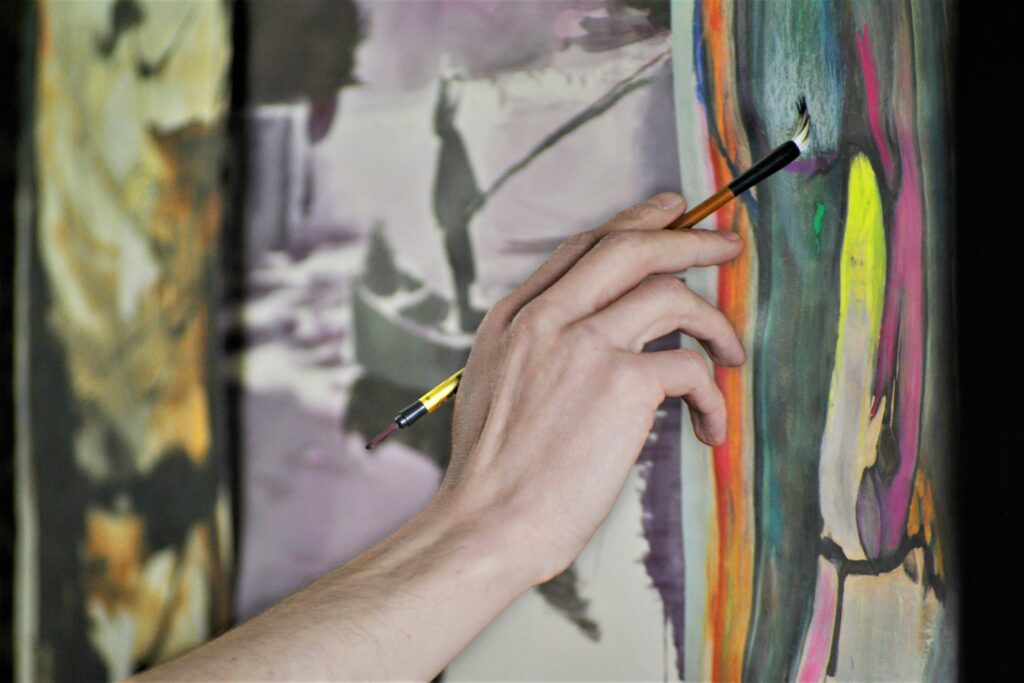
Every painting begins with a spark often a feeling, memory, or instinctual pull that guides the first mark. From there, the process is a careful dance between control and letting go, allowing each layer to respond to the one beneath it.
Navigating Intuition and Structure
Creating abstract work isn’t about chaos; it’s about shaping the unexpected. While spontaneity drives early movements, structure begins to emerge as the piece evolves.
The initial stages are guided by intuition and raw gesture
Later layers refine intention, adding balance and depth
Each decision is both emotional and compositional
The Power of Experimentation
Experimentation plays a defining role. Unexpected textures, layered transparencies, and unplanned color reactions often lead to exciting visual breakthroughs.
Trying new tools or techniques can unlock original forms
Mistakes are often a source of innovation
Risk taking pushes the visual language forward
Emotion and Memory in Gesture
Abstract painting, for this artist, carries a deeply personal undertone. Each gesture is a translation of feeling an echo of memory that emerges through color, motion, and form.
Emotional undercurrents show up in brushwork, layering, and color shifts
Personal history becomes embedded in the physicality of the surface
The non representational becomes a mirror for lived experience
What Inspires Your Use of Color and Form?
A lot of it comes from the world when it’s not trying to impress you. Trees caught in wind. Cracked sidewalks. Half lit buildings at dusk. Nature and architecture offer their own quiet vocabularies line, contrast, repetition and dreams are where those elements distort and reorganize themselves. That gap between what you see and what you feel is where form gets interesting.
Imperfection matters. I don’t clean up every smudge or harsh transition. Those are often the moments that feel the most human. Contrast whether it’s color, texture, or density allows energy to enter the work. It creates tension, and tension holds attention.
Scale is a conversation with space. A piece meant for a tight room hits differently than one that’s ten feet wide and hanging in a loft. The work doesn’t just go up on the wall it changes how the space feels, how people move around it. That awareness seeps into every decision I make at the canvas or panel stage.
How Has the Abstract Art Landscape Evolved?

Abstract art has weathered its fair share of skepticism, often dismissed as inaccessible or indulgently vague. That’s shifting. Public perception today leans more open, especially among younger generations raised in a swirl of digital visuals and fragmented meaning. Abstract work, once niche, now feels native to a world where emotion and instinct often carry more weight than literal representation.
Galleries have taken note. The commercial appetite for abstraction is no longer confined to blue chip circles. Mid tier and emerging spaces are increasingly staking their reputations on abstract artists with distinct visual identities, not just pedigrees. Demand is subtler now it’s not about filling rooms with chaotic color, but about striking a nerve.
Digital platforms Instagram, Artsy, online curators have amplified this shift. Artists can build global audiences without waiting for New York or Berlin to discover them. That visibility comes with a downside, though: saturation. It’s harder than ever to innovate when your feed is filled with every possible take on shapes and smears.
Originality, then, means going deeper, not louder. It means using your medium to punch below the surface to reflect your story, not just match a style. In a crowded field, those who survive are the ones who actually say something.
(Explore more in the current oil exhibitions)
What Role Do Materials Play in Your Work?
Oil paints have stuck around for a reason they’re honest. There’s a depth to oil that acrylics and synthetics still chase. Layer by layer, oils allow space to pause, rethink, and build tension across time. The durability matters too. They hold their color, they age with purpose, and they carry a physical weight that almost demands respect.
But it’s not all clean tradition. Many abstract artists myself included test the edge by mixing media. That’s where insight (and sometimes trouble) lives. Oil over acrylic? Maybe. Sand in the gesso? Risky, but effective. It’s a conversation between mediums, and not every one goes well. Still, those failures teach you more than a clean canvas ever will.
At the core of it all is touch. Not metaphorical physical. You feel through the tools: brush, knife, hand. The push and drag of oil across canvas connects thought and material in real time. That tactile link shapes how the piece breathes.
You can see this kind of material intensity on display in many of the current oil exhibitions. The medium still leads, but only because artists keep challenging it.
What Advice Would You Give Emerging Abstract Artists?
Start with discipline. That doesn’t mean turning into a machine it means showing up when it’s hard, painting when the spark isn’t flashy, and editing your own work with a clear eye. Style comes later. First, you need mileage.
Chasing trends will bury your voice. What’s popular now will look tired next year. If your work doesn’t feel true, it won’t hold up even to yourself. Better to follow the deeper thread: What makes you restless? What do you keep returning to when everything else fades?
Lastly: share your work. Don’t wait for some imagined ‘perfect’ version to earn its way into the world. Put your ideas into motion. Art thrives when it’s seen, felt, discussed even misunderstood. Hiding in the studio won’t teach you much. Release it, learn from the echo, and return stronger.

 Ask Gabrielo Bradfordsicker how they got into artist spotlights and interviews and you'll probably get a longer answer than you expected. The short version: Gabrielo started doing it, got genuinely hooked, and at some point realized they had accumulated enough hard-won knowledge that it would be a waste not to share it. So they started writing.
What makes Gabrielo worth reading is that they skips the obvious stuff. Nobody needs another surface-level take on Artist Spotlights and Interviews, Exhibition Announcements and Reviews, Art Gallery News. What readers actually want is the nuance — the part that only becomes clear after you've made a few mistakes and figured out why. That's the territory Gabrielo operates in. The writing is direct, occasionally blunt, and always built around what's actually true rather than what sounds good in an article. They has little patience for filler, which means they's pieces tend to be denser with real information than the average post on the same subject.
Gabrielo doesn't write to impress anyone. They writes because they has things to say that they genuinely thinks people should hear. That motivation — basic as it sounds — produces something noticeably different from content written for clicks or word count. Readers pick up on it. The comments on Gabrielo's work tend to reflect that.
Ask Gabrielo Bradfordsicker how they got into artist spotlights and interviews and you'll probably get a longer answer than you expected. The short version: Gabrielo started doing it, got genuinely hooked, and at some point realized they had accumulated enough hard-won knowledge that it would be a waste not to share it. So they started writing.
What makes Gabrielo worth reading is that they skips the obvious stuff. Nobody needs another surface-level take on Artist Spotlights and Interviews, Exhibition Announcements and Reviews, Art Gallery News. What readers actually want is the nuance — the part that only becomes clear after you've made a few mistakes and figured out why. That's the territory Gabrielo operates in. The writing is direct, occasionally blunt, and always built around what's actually true rather than what sounds good in an article. They has little patience for filler, which means they's pieces tend to be denser with real information than the average post on the same subject.
Gabrielo doesn't write to impress anyone. They writes because they has things to say that they genuinely thinks people should hear. That motivation — basic as it sounds — produces something noticeably different from content written for clicks or word count. Readers pick up on it. The comments on Gabrielo's work tend to reflect that.