
You’ve seen the golden light on the Bassin d’Arcachon.
You’ve stood there, breath caught, wondering why no photo does it justice.
But then you walk into a gallery and feel nothing. Too touristy. Too safe.
Too much beige maritime art you’ve already seen in every souvenir shop.
I get it. You didn’t come all this way to settle for wallpaper.
This isn’t a list of every gallery in town.
It’s a tight, curated path through the real ones (the) studios and spaces locals actually talk about.
I’ve spent years watching which galleries open new shows that matter. Which ones slowly close when the season ends. Which ones sell work you’ll still want to look at ten years from now.
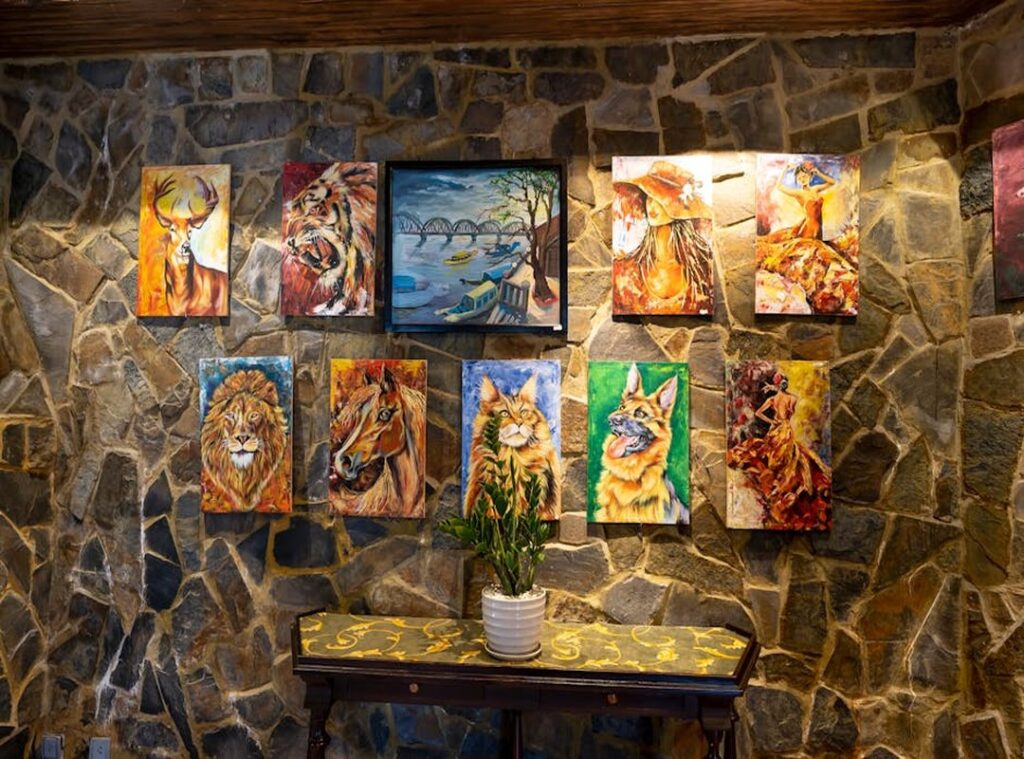
Gallery Paintings Arcachdir aren’t just decor. They’re proof you were there. And you paid attention.
You’ll find one that fits your eye. Not the crowd’s. Not the brochure’s.
Yours.
Why Arcachon’s Art Isn’t Just Postcard Stuff
I walked into Arcachdir last Tuesday and stopped breathing for three seconds. (Not exaggerating. The light hit the canvas just right.)
That’s the thing about this place. The art doesn’t sit above the space. It breathes with it.
You see the Dune du Pilat in every ochre wash. Taste the oyster farms in the salt-crackled texture of a mixed-media piece. Feel the sway of the cabanes tchanquées in the tilt of a brushstroke.
This isn’t “inspired by” nature. It is nature, translated.
The coastal light here is flat and liquid at noon, then turns gold-and-ash by 4 p.m. Artists don’t choose palettes (the) Bassin chooses for them.
Pine bark grays. Ocean greens that don’t exist anywhere else. Sky blues so thin they look like they’ll tear.
Try finding that in a Paris gallery. You’ll get theory. You’ll get price tags.
You won’t get a painting that smells faintly of iodine and pine resin.
Arcachon’s scene mixes big names who moved here to stay, not just summer, with kids from La Teste who paint oyster crates and tide charts.
No gatekeeping. No jargon. Just people making work because the place demands it.
Gallery Paintings Arcachdir? Yeah (that’s) where you go when you want to see what the Bassin says, not what someone thinks it should say.
Most galleries here open at 11 a.m. Close at 7 p.m. And yes.
The owner will pour you a glass of white if you ask nicely.
Go early. Stay late. Watch how the light changes on the walls.
It’s not decoration. It’s documentation.
Arcachon’s Real Art Stops: Not the Postcard Ones
I walked into Galerie L’Éclat and immediately stopped breathing. It’s a converted boathouse. Light floods in from floor-to-ceiling windows facing the Bassin.
They show bold, large-scale abstract paintings. Think thick oil slabs, raw edges, colors that don’t apologize.
This isn’t for people who want art to match their sofa. It’s for those who stand in front of a canvas and feel something shift in their chest. Perfect if you’re looking for a statement piece.
Or just need proof that paint can still punch.
Galerie Miroir is the opposite. Small. Dimmed.
Intimate. They specialize in photography and mixed-media installations (one) recent show used salt, voice recordings, and broken mirror fragments to talk about memory loss.
You’ll see fewer people here. More silence. More leaning in.
A must-visit if you’ve ever stared at a photo and wondered what happened right before this moment.
Then there’s Atelier du Port. Bright. Airy.
I go into much more detail on this in Exhibition Paint Arcachdir.
Loft-style, yes. But also messy, lived-in, with coffee rings on the press releases. They host vernissage every first Friday.
Free wine. No RSVP. Artists show up and talk.
No scripts. Just real talk.
They don’t sell “Gallery Paintings Arcachdir”. They sell work made here, by people who live here. Not postcards.
Not souvenirs. Actual art with calluses on its hands.
Pro tip: Go on a Tuesday morning. The light hits the west wall just right. And you’ll have the whole space to yourself.
Do you really want art that looks good on Instagram?
Or do you want art that makes you pause mid-step and rethink your whole afternoon?
I know which one I choose.
Every time.
Capturing the Coast: Where to Find Traditional & Maritime Art
I walk into Galerie L’Écluse and smell turpentine and old wood. Not digital fumes. Not screen glare.
Just paint, canvas, and salt air trapped in the frame.
You’ll find pinasses here (those) low-slung, high-prowed fishing boats that still bob in Arcachon’s basin. Painted in oils, thick and slow-drying. Not quick Instagram shots.
These took weeks. Maybe months.
Galerie Le Phare has watercolors of the port at dawn. Tiny details: rope coiled on wet cobblestones, a fisherman’s cap tilted just so. You can feel the chill off the paper.
The Ville d’Hiver shows up everywhere. Pastel villas with wrought-iron balconies. Shuttered windows.
Sunlight hitting stucco at 4 p.m. Exactly how it looked in 1928. And yes (it) still looks like that today.
This isn’t abstract. It’s not conceptual. It’s recognition.
You see a painting and think: I stood right there.
That’s why people buy it. Not as decor. As memory anchor.
Some galleries feel like museums (hushed,) untouchable. These don’t. The owner pours you tea.
Asks if you’ve seen the oyster beds at low tide. (They’re wild. Bring boots.)
The Exhibition Paint Arcachdir runs through October. It’s where three local artists show new seascapes (all) done on-site, no studio edits.
Gallery Paintings Arcachdir? That’s what locals call the whole genre. Not a brand.
A habit. A reflex.
You don’t need art school to get it. You just need to have watched the tide go out.
Pro tip: Go on a Tuesday morning. Fewer people. More time with the gallerist.
They’ll tell you which painter actually sailed a pinasse for research.
Others? Yeah, they’ll cost more. But you’re not buying pigment.
Some pieces cost less than a weekend in Bordeaux.
You’re buying continuity.
Arcachon Gallery Walk: Do It Right
Start near the central market. That’s where the galleries cluster tight and the light hits the windows just right.
I skip the map app. I walk. Turn where the paint looks wet.
Duck into places that smell like turpentine or old paper.
Check hours first. Seriously. Some galleries close Tuesday.
Others vanish in October. Don’t show up to a locked door and a handwritten note.
Talk to the gallerists. Ask why that blue is smeared across the canvas. Ask who the artist fought with last week.
Grab a coffee after two stops. Or a glass of wine. Sit.
They’ll tell you. They want to.
Let the images settle. Your brain needs downtime between brushstrokes.
Don’t rush the Gallery Paintings Arcachdir. They’re not wallpaper.
The best ones stay with you longer than your espresso order.
You’ll find current works and context on the Exhibition Paintings Arcachdir page.
That One Painting You’ll Still Love in Ten Years
I’ve been there. Standing in Arcachon, overwhelmed by the light on the water, the smell of pine and salt. And wondering how to take any of it home.
Not another keychain. Not another postcard.
You want something real. Something that holds the feeling, not just the view.
That’s why Gallery Paintings Arcachdir matter. They’re not decor. They’re memory anchors.
Modern pieces. Coastal classics. Local hands.
All rooted in this place.
You don’t need ten galleries. Just one that stops you cold.
Before your next trip (pick) one from this list. Book the visit. Stand in front of it.
See if it breathes.
Most people wait until it’s too late. Then they settle.
Don’t settle.
Go see it. Buy it. Hang it where you’ll pass it every day.
That painting? It’ll outlast every souvenir you’ve ever bought.

 Bernardon Holmanate has opinions about art techniques and methods. Informed ones, backed by real experience — but opinions nonetheless, and they doesn't try to disguise them as neutral observation. They thinks a lot of what gets written about Art Techniques and Methods, Trends in Contemporary Art, Exhibition Announcements and Reviews is either too cautious to be useful or too confident to be credible, and they's work tends to sit deliberately in the space between those two failure modes.
Reading Bernardon's pieces, you get the sense of someone who has thought about this stuff seriously and arrived at actual conclusions — not just collected a range of perspectives and declined to pick one. That can be uncomfortable when they lands on something you disagree with. It's also why the writing is worth engaging with. Bernardon isn't interested in telling people what they want to hear. They is interested in telling them what they actually thinks, with enough reasoning behind it that you can push back if you want to. That kind of intellectual honesty is rarer than it should be.
What Bernardon is best at is the moment when a familiar topic reveals something unexpected — when the conventional wisdom turns out to be slightly off, or when a small shift in framing changes everything. They finds those moments consistently, which is why they's work tends to generate real discussion rather than just passive agreement.
Bernardon Holmanate has opinions about art techniques and methods. Informed ones, backed by real experience — but opinions nonetheless, and they doesn't try to disguise them as neutral observation. They thinks a lot of what gets written about Art Techniques and Methods, Trends in Contemporary Art, Exhibition Announcements and Reviews is either too cautious to be useful or too confident to be credible, and they's work tends to sit deliberately in the space between those two failure modes.
Reading Bernardon's pieces, you get the sense of someone who has thought about this stuff seriously and arrived at actual conclusions — not just collected a range of perspectives and declined to pick one. That can be uncomfortable when they lands on something you disagree with. It's also why the writing is worth engaging with. Bernardon isn't interested in telling people what they want to hear. They is interested in telling them what they actually thinks, with enough reasoning behind it that you can push back if you want to. That kind of intellectual honesty is rarer than it should be.
What Bernardon is best at is the moment when a familiar topic reveals something unexpected — when the conventional wisdom turns out to be slightly off, or when a small shift in framing changes everything. They finds those moments consistently, which is why they's work tends to generate real discussion rather than just passive agreement.