
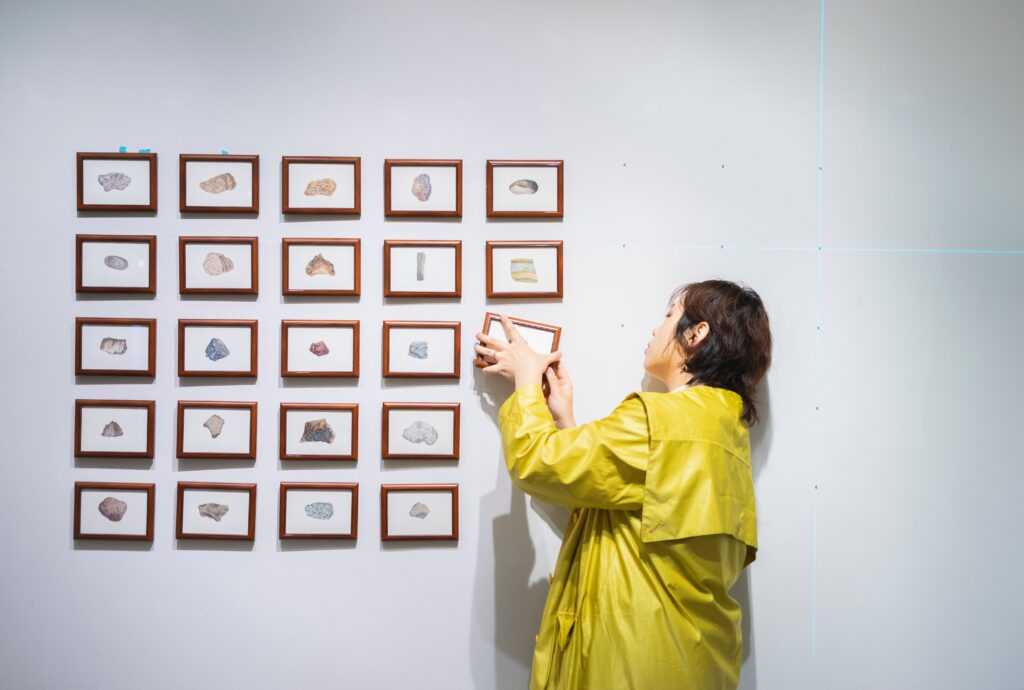
A visitor may spend twenty minutes with a painting and never notice the work that made the encounter possible. Behind the finished exhibition are months of decisions about contracts, copyright, installation, staffing and care. These are not separate from the art: they shape what can be shown, how artists are treated, and whether a gallery can keep its doors open.
Rights Are Part of the Exhibition
Before a work reaches the wall, a gallery needs clarity about who owns it, who may reproduce it, and what happens when the show closes. An artist might grant permission to display a sculpture but not to use its image in a catalogue, social post or press release. A lender may have conditions around transport, photography or public access. If those details are left to memory, small misunderstandings can grow into costly disputes.
Clear agreements do not diminish artistic freedom. They give artists and institutions a shared account of what has been agreed, leaving fewer surprises when a work is photographed, toured or promoted. Galleries can make the process more humane by explaining terms in plain language and making time for questions, rather than presenting a dense document at the last minute.
Make Legal Knowledge Readable
Legal questions often recur across the art world: image permissions, consignment terms, copyright, insurance and the responsibilities of lenders. A gallery’s public-facing writing can help demystify these subjects, provided it distinguishes general information from advice about a particular case. When an institution commissions a guest article from a lawyer, it should look for someone familiar with the relevant area of law and the jurisdiction involved.
For editors mapping possible publishers or contributors, a law guest-posting directory can offer a broad list of legal sites to compare. Its usefulness is in the initial sorting: practice area, jurisdiction and audience matter more than a large placement count. A gallery should still assess each publisher’s editorial standards and whether its readers are likely to benefit from the piece. The goal is informed conversation, not simply getting a link onto a page.
Installation Is Physical Work
The visual calm of a gallery can conceal demanding labor. Preparators lift, climb, reach overhead, move crates and work to tight installation schedules. Registrars may spend long hours at screens and in storage spaces. Even the opening-night team is often on its feet for most of a shift. Treating these jobs as part of the gallery’s artistic infrastructure means planning for safety, realistic timelines and adequate breaks.
Practical measures are often unglamorous but consequential: use the right lifting equipment, make sure staff know how to handle a particular object, and avoid building a schedule that depends on repeated rushed lifts. Where resources allow, institutions can also support workers in developing routines for strength, mobility and recovery. Some people look into remote personal training as one flexible option; Osdire’s guide to trainer costs can help readers understand the range of pricing and what to ask before hiring. It is one possible route, not a substitute for safe working conditions or professional advice when an injury occurs.
Care Extends to the Audience
Accessibility is also a matter of preparation. Visitors benefit when galleries provide accurate information about stairs, seating, lighting, sound and the length of a visit. A quiet place to sit can make the difference between a brief glance and a meaningful hour with the work. Clear labels and thoughtfully placed interpretation help people enter an exhibition without assuming they already know its history or vocabulary.
These details need not compete with curatorial ambition. They can sharpen it. A gallery that considers how different people move through a room may discover that a work is better experienced from another angle, or that a label interrupts rather than supports looking. Careful planning gives the exhibition more ways to meet its audience.
A Sustainable Practice Behind the Scenes
Good exhibition-making depends on relationships that continue beyond opening night. Artists need timely communication about fees, transport and image use. Staff need manageable workloads and clear responsibilities. Visitors need an invitation that does not assume prior expertise. None of these elements guarantees that an exhibition will succeed, but neglecting them makes the work more fragile.
When galleries treat contracts, physical wellbeing and access as part of their cultural work, they build conditions in which art can be encountered with greater trust. The public sees the finished room; the institution’s care is often invisible. Yet it is there—in the permissions secured, the crate moved safely, the thoughtful label—that an exhibition becomes more than a collection of objects on walls.

 Bernardon Holmanate has opinions about art techniques and methods. Informed ones, backed by real experience — but opinions nonetheless, and they doesn't try to disguise them as neutral observation. They thinks a lot of what gets written about Art Techniques and Methods, Trends in Contemporary Art, Exhibition Announcements and Reviews is either too cautious to be useful or too confident to be credible, and they's work tends to sit deliberately in the space between those two failure modes.
Reading Bernardon's pieces, you get the sense of someone who has thought about this stuff seriously and arrived at actual conclusions — not just collected a range of perspectives and declined to pick one. That can be uncomfortable when they lands on something you disagree with. It's also why the writing is worth engaging with. Bernardon isn't interested in telling people what they want to hear. They is interested in telling them what they actually thinks, with enough reasoning behind it that you can push back if you want to. That kind of intellectual honesty is rarer than it should be.
What Bernardon is best at is the moment when a familiar topic reveals something unexpected — when the conventional wisdom turns out to be slightly off, or when a small shift in framing changes everything. They finds those moments consistently, which is why they's work tends to generate real discussion rather than just passive agreement.