
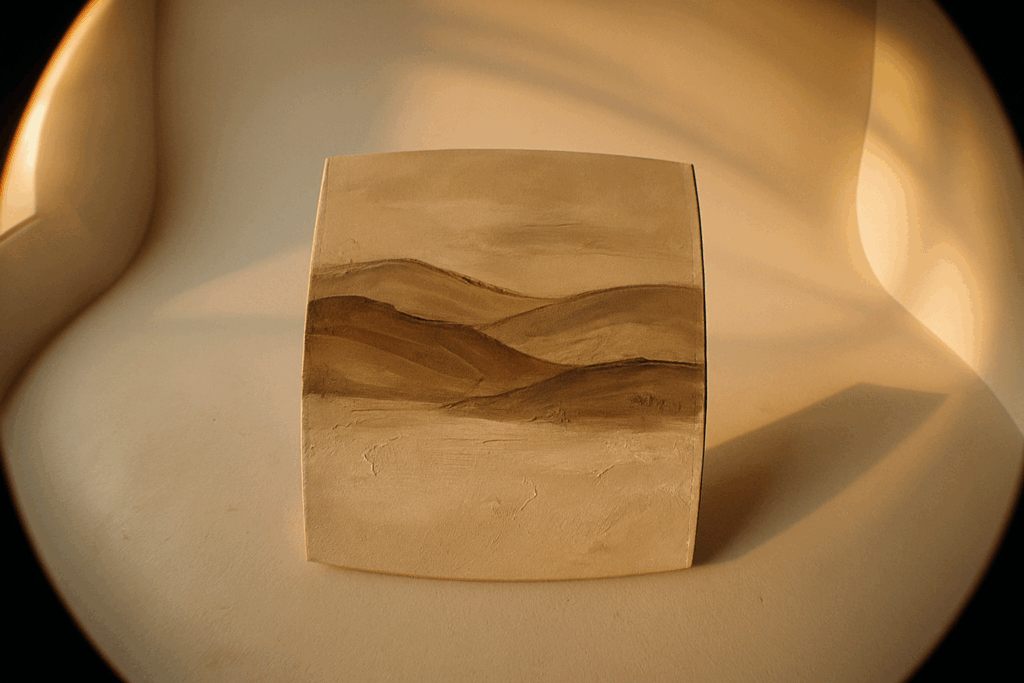
The Shift Toward Timeless Materials
Modern designers aren’t chasing novelty for novelty’s sake. They’re dialing back the noise and looking for work that holds weight. Oil paintings are a natural fit. Unlike digital prints or acrylics, oils bring physical depth. The slow layering, the precision, the imperfections they invite you in. A brushstroke in oil doesn’t just sit on the surface; it holds time. That kind of texture can’t be faked, and it doesn’t get old.
There’s also a pull toward something more emotional. In a space overrun by screens and synthetic surfaces, oil paintings feel human. They come with history, even if they were made last week. A lot of interiors now borrow from past decades midcentury lines, ‘70s palettes, vintage lighting. Oil paintings slot right in. Even brand new pieces carry that old world weight.
Nostalgia has crept into furniture, lighting, layout and now it’s anchoring the walls. Art is no longer just an add on; it’s the soul of the room. Oil brings both gravity and beauty. And that’s why it’s back.
Oil Paintings as a Response to Minimalism Fatigue
For years, interiors worshipped a clean, all white gospel. Sparse walls. Modular furniture. Not much soul. But lately, that’s cracking. People want spaces that feel lived in not just photographed. They want warmth, history, and texture. That’s where oil paintings come in.
A single canvas with weight and brushstroke can ground an open concept room faster than any piece of furniture. The tactile quality of oil the visible strokes, the depth of layering pulls the eye and slows it down. In a world buzzing with digital everything, it’s a visual counterweight.
Designers are leaning in. Instead of cluttered gallery walls, we’re seeing the rise of the statement piece: one oversized oil painting anchoring a wall, giving the room focus and intention. Less noise, more presence. It’s not just about hanging art it’s about making it part of the foundation.
Collectability and Lasting Value

Oil paintings have always signaled cultural weight. There’s a reason they hang in museums, not just because they’re old but because they last. While trends in wall decor come and go, oils have held their footing, both physically and financially. The materials age slowly. The colors settle deeper. That kind of permanence is rare in a world that updates every week.
Collectors especially younger ones are catching on. They’re not just buying art to match their couch. They’re buying future vintage. An oil painting isn’t just a decor piece; it’s a time capsule with potential resale value that doesn’t peak overnight. That blend of aesthetic permanence and market value is pulling a new wave of buyers who want pieces that last and maybe even outlast them.
In an era dominated by digital noise, tangible legacy matters. Oil works deliver that, brushstroke by brushstroke.
The Influence of Artists Like ArcyArt
Oil painting isn’t just surviving it’s evolving, led by artists who respect tradition but aren’t trapped by it. A new wave of painters is bringing classical technique into the now, pairing centuries old methods with themes that speak to contemporary life: urban decay, digital isolation, climate anxiety, and identity. They’re reminding collectors that oil still has teeth it still tells the truth, slowly, and with weight.
One of the most talked about names in this renaissance is ArcyArt. After a long period off the radar, his return has sparked attention not just in gallery circles but also among interior designers and consultants looking for pieces that ground a modern space. His latest collections moody, layered, and uncomfortably honest are landing in lofts, hotels, and even high concept retail environments. His work functions as emotional architecture, something far more textured than a print or poster.
Design pros are paying attention. ArcyArt’s paintings are being actively sourced for spaces that need a center of gravity. And with digital art flooding the market, oil on canvas brings tactile credibility and scarcity. Each piece, handcrafted and imperfect, tells its own story and that’s becoming a rare commodity in today’s curated, scrollable culture.
For a closer look at his recent work and growing influence, visit ArcyArt’s comeback and work.
Sustainability and Slow Art
In a world obsessed with speed and disposability, oil painting stands out as a form of resistance. It’s not fast. It’s not cheap. And that’s exactly the point. Creating an oil painting takes time layer by layer, glaze by glaze. It’s a commitment to permanence in an era of click and forget decor.
The process itself pushes against the churn of mass production. There’s no shortcut. From mixing pigments to drying times, oil painting demands presence. It’s a medium built on patience and craft, which makes it more than art it becomes a mindset. For buyers, hanging an oil piece isn’t just about style; it’s about choosing something meant to last.
This philosophy lines up neatly with broader sustainability trends in design. Instead of plastic prints or trend chasing canvases that’ll be swapped out in a year, oil paintings offer a kind of rootedness. They age. They evolve with the spaces they occupy. More designers are viewing them not just as decoration, but as long term artifacts anchors in interiors that are finally slowing down.
Where It’s Headed
Expect to see more oil paintings hanging in boardrooms, tech offices, and public lobbies. As digital screens saturate every corner of life, there’s a growing need for balance something human, textured, and enduring. Oil paintings are stepping up to meet that need. In a climate where everything is optimized, fast, and editable, these works stand still. That’s the point.
Companies, especially in tech, are beginning to understand that sterile minimalism doesn’t inspire employees or resonate with visitors like it used to. Public spaces want pieces that feel intentional, not generic. And corporate buyers are trading wall vinyls and digital prints for something with weight and history.
Artists like ArcyArt are leading that charge. His work fuses classical technique with modern energy think rich brushwork blended with abstract storytelling. Designers are taking note. Whether it’s a striking portrait at the end of a hallway or a vivid landscape anchoring an open office, oil paintings are no longer just for private collectors. They’re becoming part of how spaces think and feel.
The future isn’t anti tech. It’s about contrast. And oil painting is carving out a bold place in that shift.

 Bernardon Holmanate has opinions about art techniques and methods. Informed ones, backed by real experience — but opinions nonetheless, and they doesn't try to disguise them as neutral observation. They thinks a lot of what gets written about Art Techniques and Methods, Trends in Contemporary Art, Exhibition Announcements and Reviews is either too cautious to be useful or too confident to be credible, and they's work tends to sit deliberately in the space between those two failure modes.
Reading Bernardon's pieces, you get the sense of someone who has thought about this stuff seriously and arrived at actual conclusions — not just collected a range of perspectives and declined to pick one. That can be uncomfortable when they lands on something you disagree with. It's also why the writing is worth engaging with. Bernardon isn't interested in telling people what they want to hear. They is interested in telling them what they actually thinks, with enough reasoning behind it that you can push back if you want to. That kind of intellectual honesty is rarer than it should be.
What Bernardon is best at is the moment when a familiar topic reveals something unexpected — when the conventional wisdom turns out to be slightly off, or when a small shift in framing changes everything. They finds those moments consistently, which is why they's work tends to generate real discussion rather than just passive agreement.
Bernardon Holmanate has opinions about art techniques and methods. Informed ones, backed by real experience — but opinions nonetheless, and they doesn't try to disguise them as neutral observation. They thinks a lot of what gets written about Art Techniques and Methods, Trends in Contemporary Art, Exhibition Announcements and Reviews is either too cautious to be useful or too confident to be credible, and they's work tends to sit deliberately in the space between those two failure modes.
Reading Bernardon's pieces, you get the sense of someone who has thought about this stuff seriously and arrived at actual conclusions — not just collected a range of perspectives and declined to pick one. That can be uncomfortable when they lands on something you disagree with. It's also why the writing is worth engaging with. Bernardon isn't interested in telling people what they want to hear. They is interested in telling them what they actually thinks, with enough reasoning behind it that you can push back if you want to. That kind of intellectual honesty is rarer than it should be.
What Bernardon is best at is the moment when a familiar topic reveals something unexpected — when the conventional wisdom turns out to be slightly off, or when a small shift in framing changes everything. They finds those moments consistently, which is why they's work tends to generate real discussion rather than just passive agreement.